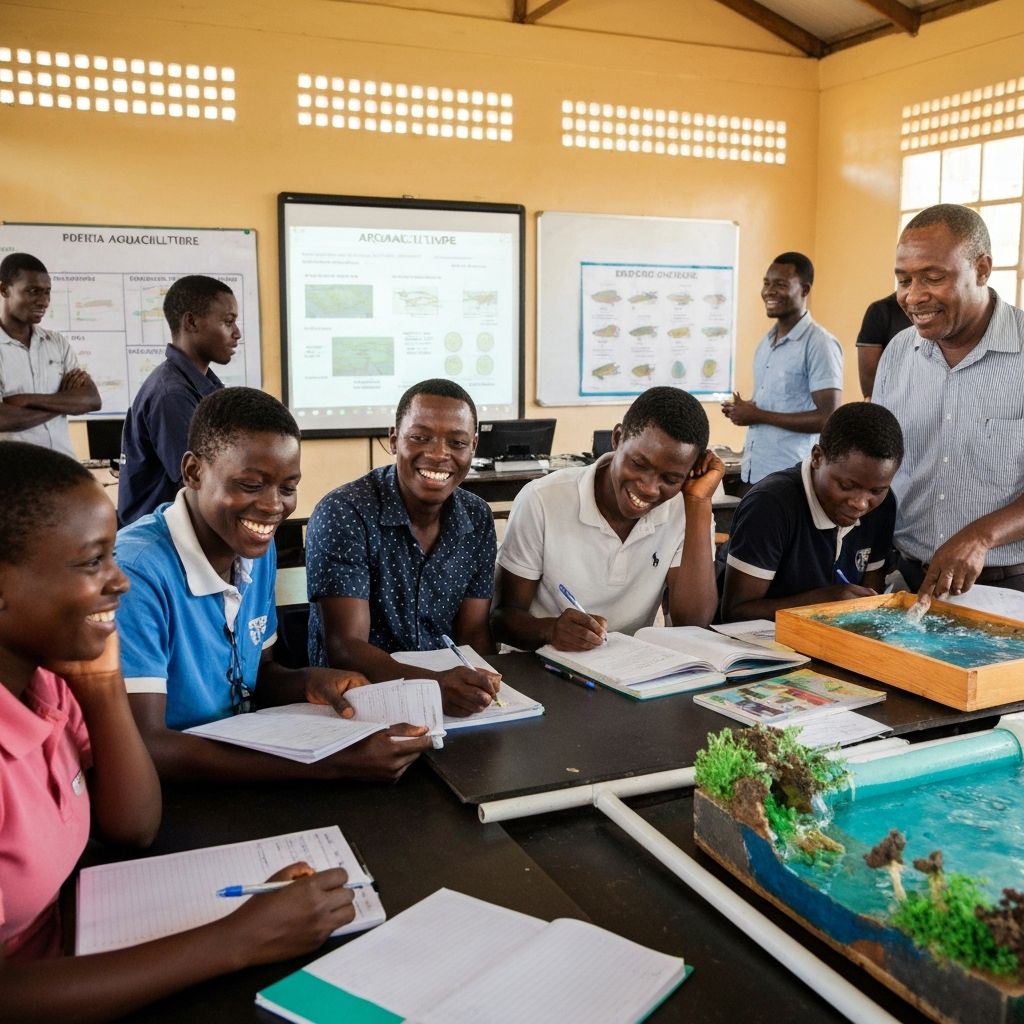
Youth Aquapreneurship: Building the Next Generation of Fish Farmers
There is a number that defines the opportunity in African aquaculture more than any other: 19. That is the continent's median age. Africa is young, extraordinarily, relentlessly young, in a way that no other continent has ever been. And its aquaculture sector, one of the most resource-rich and underperforming sectors on the planet, is overwhelmingly operated by ageing smallholders using methods that have not fundamentally changed in decades.
Closing that gap, between youthful energy and practical aquaculture expertise, is the defining work of our generation.
Why Youth? Why Now?
The arguments for youth-led aquaculture development go beyond demographics, though the demographics alone are compelling. Young Africans are more likely to adopt digital tools, more open to new production methods, and more connected to peer networks that allow innovations to spread rapidly. They are also more likely to stay in the communities where they are trained rather than migrating to urban centres, which means the impact they create compounds locally over time.
But the most powerful argument is simply this: young people are hungry for opportunity, and the aquaculture sector, when properly structured and supported, can deliver it.
A fish pond does not require land ownership. It does not require significant formal education. It does not require an urban address or a professional network. It requires practical skill, basic capital, access to inputs, and connection to markets. These are all things that a well-designed training and enterprise support program can provide.
What Aquapreneurship Actually Means
We use the term "aquapreneurship" deliberately at AquaProX Africa. It signals something different from hobbyist fish farming or subsistence pond culture. An aquapreneur is a business-minded producer who approaches fish farming as a commercial enterprise, managing costs, understanding margins, investing in productivity improvements, and building relationships with customers.
The shift from "I have a pond" to "I run a fish farming business" sounds subtle, but it changes everything. It changes how farmers approach mortality events, which they now view as costly losses to be minimised rather than inevitable facts of life. It changes how they respond to market prices, which they monitor rather than simply accept. It changes their relationship with training, which they now seek out because they understand it translates directly into profit.
Our training programs are designed to build this mindset alongside technical skills. We do not separate business education from fish farming instruction, we deliver them together, because in practice they are inseparable.
From the Field: Stories That Define the Mission
One of our earliest trainees was a 23-year-old from a rural community in Gwagwalada who had been working as a motorcycle taxi driver. He joined our first capacity building program with no prior knowledge of fish farming and ₦50,000 in savings. Eighteen months later, he operates three earthen ponds producing catfish for a local restaurant network and employs two young people from his community.
A group of five young women in Bwari Area Council who came through our community engagement program now operate a cooperative that produces tilapia at a scale that supplies the largest market in their district. They used the cooperative model not because we imposed it, but because they recognised, through the business training component of our program, that collective production reduced their input costs and increased their pricing power.
These are not exceptional stories. They are what happens when young people receive genuine skills, genuine mentorship, and access to genuine opportunity.
What Needs to Change Systemically
Individual success stories are important, but systemic change requires more than well-designed programs. It requires policy environments that actively support youth entry into aquaculture, through subsidised input programs, accessible micro-lending, and extension services that prioritise young farmers.
It requires investors to look beyond the commoditised argument that African aquaculture is "high risk" and recognise that properly supported young aquapreneurs have demonstrated success rates that would be considered excellent in any sector.
And it requires organisations like AquaProX Africa to keep growing, to train more young people, mentor more enterprises, and demonstrate consistently that the model works at scale.
The next generation of African fish farmers is not a future aspiration. They are already in our training rooms, already managing their first ponds, already building the sector that will feed a continent.
Salifu Eyiojotule Daniel is the Founder and CEO of AquaProX Africa. He writes on youth empowerment, sustainable aquaculture, and the development of Africa's blue economy.