The Smart Pond: How AI and Sensors Are Saving Fish Farms Across Africa
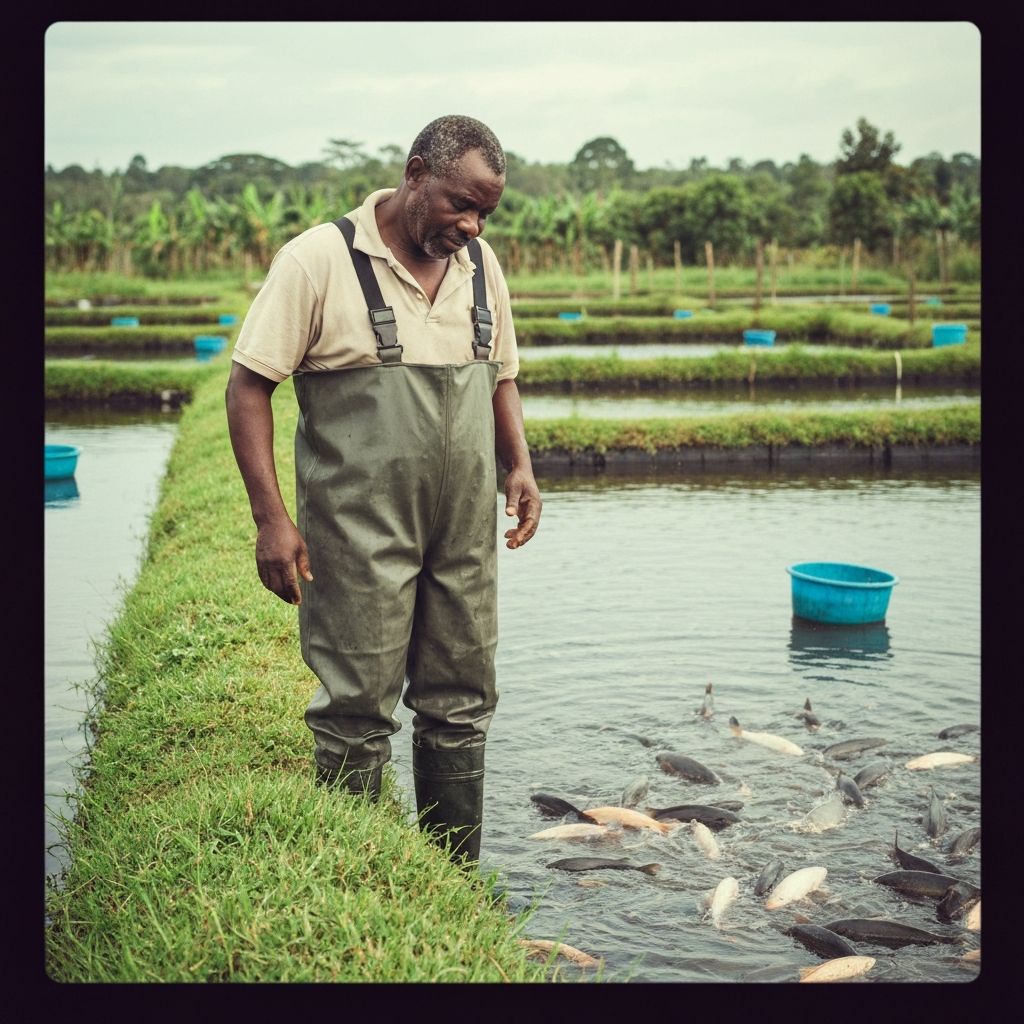
It is 3:14 in the morning. A fish farmer in Kogi State is asleep.
Across his compound, in four earthen ponds he has spent two years building, something is going wrong. The dissolved oxygen level in Pond 2 has been dropping for ninety minutes. It has now crossed the threshold that catfish cannot survive for long below. A normal night, without technology, would mean waking up to eight hundred dead fish and three months of income erased.
But tonight is different. His phone buzzes.
Pond 2 oxygen critical. 2.1 mg/L. Aeration required immediately.
He is at the pond with an aerator in under four minutes. The fish survive. All of them.
That message came from a small sensor barely larger than a TV remote, clipped to a PVC pipe at the water's edge, transmitting data every fifteen seconds to a cloud server, where an algorithm trained on ten thousand pond events compared the reading to a baseline and triggered the alert. Total cost of the sensor kit: less than thirty thousand naira.
This is what agricultural technology looks like when it actually works for the people who need it most.
Why Oxygen Is Everything
Before we talk about sensors and algorithms, it is worth understanding why dissolved oxygen is the variable that fish farmers should lose sleep over, figuratively, or literally.
Fish breathe oxygen dissolved in water. When that oxygen drops below roughly 3 mg/L, catfish and tilapia become stressed. Below 2 mg/L, they begin to die. The cruel irony is that the events most likely to crash oxygen levels, heavy cloud cover suppressing algae photosynthesis, warm nights reducing oxygen solubility, overfeeding creating bacterial blooms that consume oxygen as they break down uneaten feed, tend to happen at night, when no one is watching.
A farmer checking his ponds at six in the morning is often arriving to assess damage, not prevent it.
Real-time dissolved oxygen monitoring changes the game entirely. It means the pond never goes unwatched. It means the window between "problem developing" and "farmer intervening" shrinks from hours to minutes. Multiple independent studies from aquaculture operations in Asia, where smart monitoring has been deployed at scale, show mortality rate reductions of between 40 and 60 percent when continuous oxygen monitoring is introduced.
That number needs to sit for a moment. Forty to sixty percent fewer dead fish. For a small-scale African farmer operating on thin margins, that is the difference between a viable business and abandonment.
What a Smart Monitoring System Actually Looks Like
The term "smart aquaculture technology" can conjure images of gleaming facilities with six-figure equipment budgets. That image is increasingly disconnected from reality.
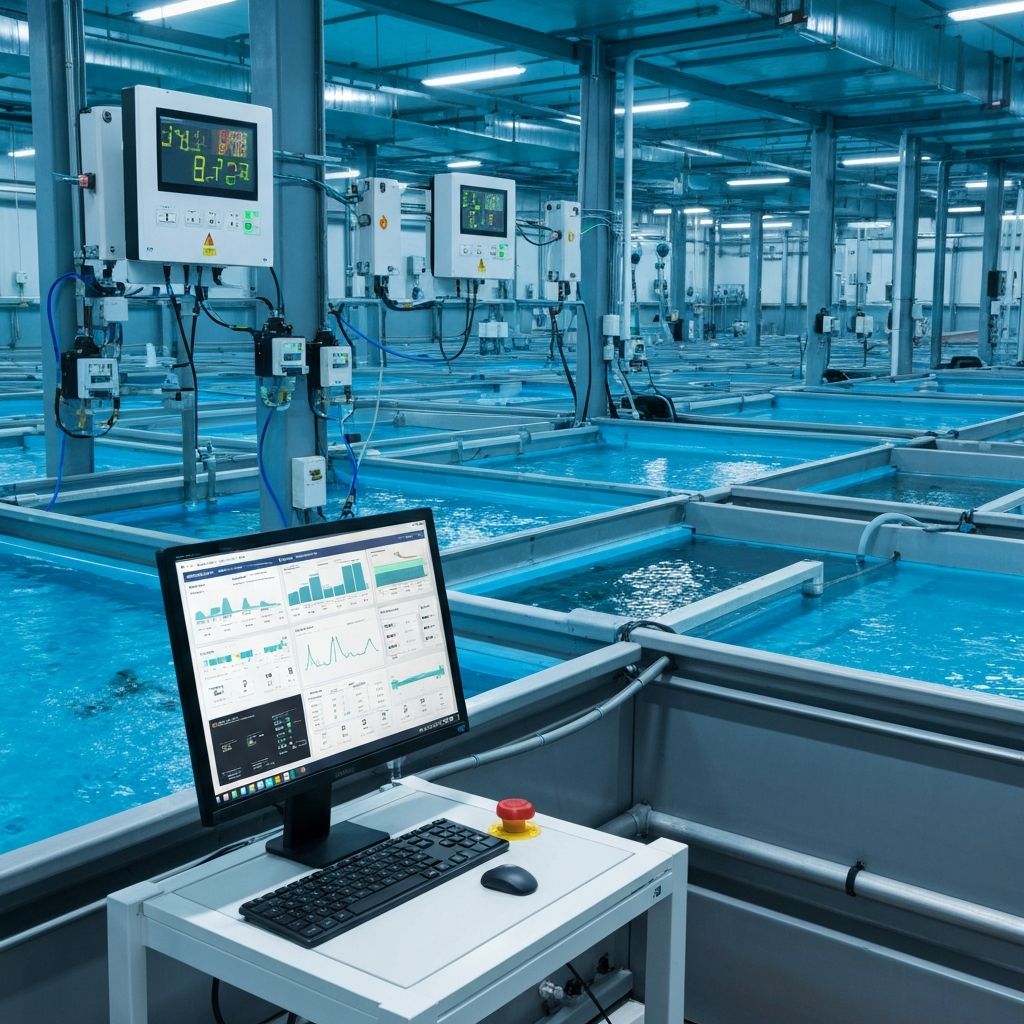
The core of a modern low-cost pond monitoring system consists of three things: sensors, connectivity, and a dashboard.
Sensors are the physical devices that sit in or near the water and measure specific parameters. Dissolved oxygen is the most critical. pH matters because it affects fish appetite and disease susceptibility. Temperature affects metabolic rate, feeding behavior, and the speed at which oxygen-depleting bacterial activity occurs. Ammonia, produced by fish waste and uneaten feed, becomes toxic above certain concentrations and is a leading cause of unexplained fish mortality in ponds where no other problem is visible.
Multi-parameter sensor probes now exist that measure all four of these simultaneously, transmitting data via GSM (the same mobile network your phone uses) to a cloud server. No internet router required. No IT infrastructure. Just a SIM card and a mobile signal, which covers most of rural Nigeria, Ghana, and Kenya already.
Connectivity is increasingly the piece that unlocks everything. Africa's mobile penetration has crossed 500 million subscribers. GSM coverage in rural agricultural regions is expanding every year. The infrastructure that enables a farmer to send mobile money is the same infrastructure that enables a sensor to send a water quality reading. That convergence is not accidental, it is the result of billions of dollars of private investment in telecommunications that aquaculture can now piggyback on for almost nothing.
Dashboards are where the data becomes actionable. The best systems present information in plain language, not technical readouts. "Your pond pH is lower than normal, this can reduce feed intake" is useful. A raw number with no context is not. Modern apps built for smallholder farmers in Africa increasingly offer voice note alerts in local languages, SMS fallback for feature phones, and visual trend charts that require no training to interpret.
AI Moves from Monitoring to Prediction
Monitoring tells you what is happening right now. Artificial intelligence tells you what is likely to happen next.
This distinction matters enormously in aquaculture, where the most costly events, disease outbreaks, oxygen crashes, feed conversion failures, rarely appear from nowhere. They develop over days, expressed in subtle patterns of water quality data that no human eye could detect but that a trained model can identify with high confidence.
Consider feeding. In a conventional pond, a farmer feeds on a schedule: morning, afternoon, sometimes evening, at a fixed rate based on estimated fish biomass. This approach wastes significant feed (expensive), overloads ponds with organic matter (dangerous), and fails to account for the fact that fish appetite varies dramatically with temperature, dissolved oxygen, time of day, and days since the last rain.
AI-assisted feeding systems measure water temperature and oxygen levels, cross-reference them against a model trained on the relationship between these variables and catfish appetite, and recommend or automate a feed dosage. Pilot programs in Nigeria and Ghana have reported feed conversion ratio improvements of 15 to 25 percent, meaning farmers grew the same amount of fish using significantly less feed. At current feed prices, that reduction translates directly into margin.
Disease detection is the frontier where AI may eventually have its most transformative impact. Computer vision systems, essentially cameras connected to image-recognition software, can monitor fish behavior and identify the subtle changes in swimming pattern, surface orientation, and feeding response that precede visible disease symptoms by three to five days. Three to five days of advance warning, in aquaculture disease management, can mean treating a contained problem rather than responding to a catastrophic one.
The African Opportunity Is Not Theoretical
What makes this moment genuinely exciting is that the technology costs have dropped to the point where deployment in African smallholder contexts is not a distant aspiration. It is happening now.
In 2024, several Nigerian aquaculture cooperatives began deploying low-cost sensor arrays across shared pond facilities, pooling monitoring data into a single dashboard managed by a community agronomist. The model reduced the cost per farm to a level competitive with a single bag of fish feed, while providing coverage that no individual farmer could justify independently.
In Kenya, mobile-first aquaculture platforms are integrating water quality data with market price feeds, allowing farmers to time their harvests based on both biological readiness and current market conditions. The insight that a farmer's catfish will reach optimal harvest weight in eighteen days, and that market prices for catfish of that size are currently at a seasonal high, is information worth real money.
At AquaProX Africa, our Technology & Innovation program introduces trainees to these tools not as exotic additions to their practice but as core components of how a professional fish farmer operates. We have seen the shift in how young aquapreneurs approach their work when they have data: they become more confident, more systematic, and significantly more profitable.
What Still Needs to Happen
Honesty requires acknowledging what is still missing.
Power remains a challenge. Sensors need energy, and rural grid reliability in much of sub-Saharan Africa makes battery-powered systems with solar backup a necessity, not an option. Small solar charging kits have made this manageable but not invisible as a cost.
Calibration and maintenance require discipline. A sensor that has not been recalibrated drifts over time and eventually provides misleading data. Building the habit of regular calibration into farm management culture is harder than installing the sensor in the first place.
And the data is only useful if someone acts on it. The most sophisticated alert system in the world cannot help a farmer who ignores the notification, or who lacks access to an aerator when one is needed. Technology amplifies capability, it does not replace the human judgment and preparedness that capable farming requires.
These are solvable problems. They are being solved, in practice, by farmers and programs across the continent. But anyone telling you that technology is a silver bullet is selling something.
The Pond at 3:14 AM
The farmer in Kogi State who received that oxygen alert did not grow up expecting to run a technology-enabled fish farm. He attended one of our training workshops, received a subsidised sensor kit through our enterprise support program, and spent forty minutes learning to interpret the dashboard on his phone.
Six months later, he has had three oxygen alerts, responded to all of them, and lost zero fish to hypoxia. He has also reduced his monthly feed spend by roughly 18 percent after adjusting his feeding schedule based on temperature data from the sensors.
He tells the story of the 3:14 AM alert to every farmer who will listen. Not because the technology is impressive, he barely thinks about the technology anymore, but because his fish are alive and his business is growing.
That is the only metric that matters.
Salifu Eyiojotule Daniel is the Founder and CEO of AquaProX Africa. To learn about our Technology & Innovation program and how to access sensor kits for your farm, visit our Programs page or contact us directly.